


China Ghana trade partnerships are creating wealth-building opportunities that most entrepreneurs completely miss. This guide is for business owners, investors, and trade professionals who want to discover profitable niches in one of Africa’s fastest-growing economic corridors.
The China Ghana business partnership has evolved beyond basic commodity trading into sophisticated value-added ventures. While everyone focuses on gold exports and infrastructure headlines, smart investors are finding hidden gems in manufacturing partnerships, technology transfers, and resource processing deals.
We’ll explore three key opportunity areas that offer the highest profit potential. First, we’ll examine untapped manufacturing and export opportunities where Chinese expertise meets Ghana’s competitive advantages. Second, we’ll dive into infrastructure development projects that create multiple revenue streams for local and international partners. Finally, we’ll uncover digital economy ventures and technology transfer deals that are reshaping Ghana’s business landscape.
These China Ghana trade opportunities require insider knowledge to access, but the rewards can be substantial for those who understand the landscape.
Understanding the China Ghana Trade Partnership Landscape

Belt and Road Initiative Impact on Ghana’s Infrastructure Development
China’s Belt and Road Initiative has transformed Ghana into a strategic hub for Chinese investments across West Africa. The initiative brought over $13 billion in infrastructure commitments to Ghana since 2013, covering ports, railways, roads, and energy projects. Chinese companies like China Harbour Engineering Company and Sinohydro Corporation have become household names in Ghana’s construction sector.
The Tema Port expansion project, funded through Chinese loans, increased the port’s capacity by 3.5 million TEUs annually. This expansion created new China Ghana business partnership opportunities in logistics, warehousing, and maritime services. The Western Railway Line project connects Ghana’s mining regions to coastal ports, opening fresh avenues for China Africa infrastructure projects and resource transportation ventures.
Chinese-built hospitals, including the University of Ghana Medical Centre, established new healthcare technology markets. These projects created demand for medical equipment suppliers, maintenance services, and healthcare training programs. The digital infrastructure component introduced 4G networks and fiber optic cables, laying groundwork for Ghana digital economy ventures.
Strategic Geographic Advantages Ghana Offers Chinese Investors
Ghana’s position as a gateway to West Africa’s 380 million consumers makes it invaluable for Chinese market expansion strategies. The country provides English-speaking business environment advantages that reduce communication barriers for Chinese companies entering Anglophone African markets.
The Gulf of Guinea coastline offers Chinese investors direct shipping routes to Asian markets, cutting transportation costs by 30% compared to landlocked alternatives. Ghana’s three operational ports – Tema, Takoradi, and Sekondi – provide multiple entry points for China Ghana trade opportunities.
Political stability spanning over three decades gives Chinese investors confidence in long-term projects. Ghana’s democratic governance system and peaceful power transitions create predictable business environments that Chinese state-owned enterprises prefer for major infrastructure investments.
The country’s membership in ECOWAS opens access to regional markets through preferential trade agreements. Chinese manufacturers can establish production bases in Ghana and export duty-free to 15 West African countries, creating Ghana manufacturing export opportunities across the region.
Current Trade Volume Statistics and Growth Projections
Bilateral trade between China and Ghana reached $7.2 billion in 2023, representing a 180% increase from 2015 levels. China became Ghana’s largest trading partner, accounting for 18% of Ghana’s total trade volume. Chinese imports to Ghana grew from $3.8 billion to $5.1 billion, while Ghanaian exports to China increased from $1.2 billion to $2.1 billion.
| Trade Category | 2020 | 2023 | Growth Rate |
|---|---|---|---|
| Total Bilateral Trade | $5.8B | $7.2B | 24% |
| Chinese Exports to Ghana | $4.2B | $5.1B | 21% |
| Ghanaian Exports to China | $1.6B | $2.1B | 31% |
Gold exports dominate Ghanaian shipments to China, comprising 65% of total exports. Cocoa and timber account for additional 20% and 10% respectively. Chinese exports to Ghana include machinery, electronics, textiles, and construction materials.
Growth projections indicate bilateral trade could reach $12 billion by 2030, driven by Ghana’s industrialization agenda and China’s growing demand for raw materials. Ghana investment opportunities in processing facilities could capture more value from commodity exports.
Key Government Policies Supporting Bilateral Commerce
Ghana’s One District One Factory (1D1F) initiative actively courts Chinese investors for manufacturing partnerships. The program offers tax incentives, land acquisition support, and streamlined permit processes for China Ghana joint ventures in industrial production.
The Ghana Investment Promotion Centre provides dedicated services for Chinese investors, including investment facilitation, after-care services, and dispute resolution mechanisms. Special Economic Zones in Tema and Sekondi offer additional incentives like duty exemptions and simplified customs procedures.
Banking regulations now permit Chinese banks to establish branches in Ghana, with Industrial and Commercial Bank of China (ICBC) leading the expansion. These banking partnerships facilitate trade financing and reduce transaction costs for bilateral commerce.
The Africa Continental Free Trade Area (AfCFTA) implementation creates new opportunities for Chinese companies operating in Ghana. Products manufactured in Ghana can access continental markets duty-free, making Ghana an attractive base for Africa China trade corridor operations. The government’s digitalization agenda supports fintech partnerships and e-commerce platforms that connect Chinese suppliers with Ghanaian retailers.
Untapped Manufacturing and Export Opportunities
Agricultural Processing Plants for Cocoa Value Addition
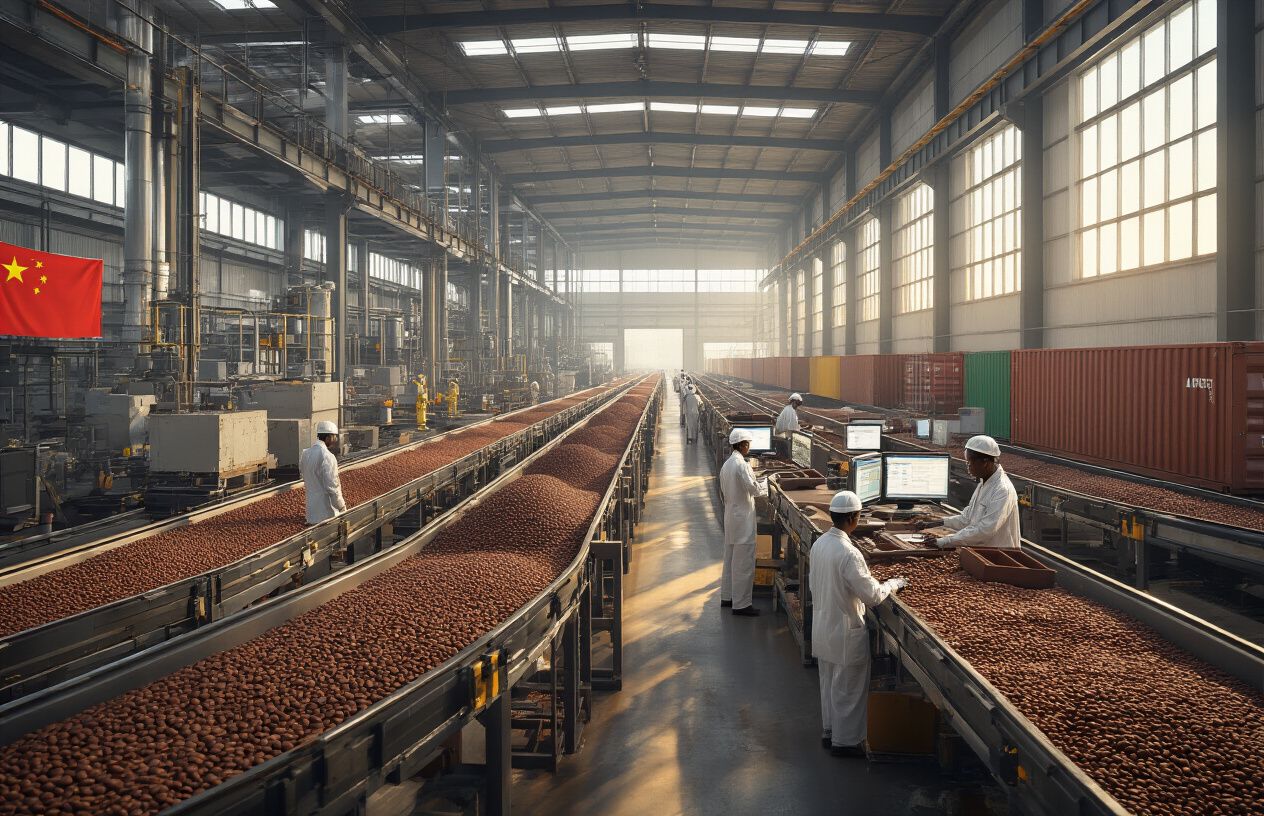
Ghana produces nearly 20% of the world’s cocoa beans, yet most of this valuable crop leaves the country unprocessed. This presents massive Ghana manufacturing export opportunities for Chinese companies with advanced food processing technology. Setting up cocoa processing facilities in Ghana means accessing premium raw materials while tapping into growing global demand for chocolate products and cocoa derivatives.
Chinese manufacturers can establish joint ventures to produce cocoa powder, butter, liquor, and finished chocolate products. The infrastructure is already in place – Ghana has established cocoa collection centers and transportation networks. What’s missing is the processing capacity and technical expertise that Chinese companies can provide.
The numbers tell the story: processed cocoa products command prices 3-4 times higher than raw beans. A chocolate bar made from Ghanaian cocoa sells for $2-3 internationally, while the raw beans used to make it earn farmers just pennies. China Ghana business partnership models in this sector can capture this value gap while creating thousands of local jobs.
Export markets are readily available through existing Chinese trade networks, particularly targeting Asian consumers who increasingly prefer premium chocolate products. Ghana’s preferential trade agreements with the EU and US also open Western markets for finished cocoa products manufactured locally.
Textile and Garment Production Using Chinese Technology
Ghana’s textile industry collapsed in the 1980s, but Chinese manufacturers see this as an opportunity rather than a barrier. The country retains skilled workers, cotton production capabilities, and strong cultural ties to textile traditions. China Ghana trade opportunities in this sector focus on establishing modern garment production facilities using Chinese machinery and management systems.
Chinese textile companies can leverage Ghana’s access to cotton from neighboring Burkina Faso and Mali while targeting both domestic and export markets. The West African textile market is worth over $15 billion annually, with most garments currently imported from Asia. Local production would dramatically reduce transportation costs and delivery times.
The competitive advantage comes from combining Chinese manufacturing efficiency with Ghanaian labor costs that are 40-50% lower than China’s coastal regions. Modern Chinese textile machinery can transform local cotton into high-quality fabrics and finished garments for both African and international markets.
Key opportunities include:
- School uniform production for Ghana’s 8 million students
- Work wear manufacturing for mining and oil industries
- Traditional kente cloth modernization using Chinese weaving technology
- Export-oriented garment assembly for European fashion brands
Electronic Assembly Operations for West African Markets
West Africa imports over $8 billion worth of electronics annually, mostly from Asia. Chinese electronics manufacturers can slash logistics costs and delivery times by establishing assembly operations in Ghana. This China Africa trade corridor strategy positions companies perfectly for the region’s growing middle class and increasing digitization.
Ghana offers several advantages for electronics assembly. The country has stable electricity supply compared to neighbors, good port facilities in Tema, and a growing pool of technically trained workers. Chinese companies can ship components for final assembly, taking advantage of lower labor costs while maintaining quality control.
Mobile phone assembly represents the biggest immediate opportunity. West Africans buy over 50 million mobile phones annually, with demand growing 15% yearly. Chinese manufacturers like Tecno and Infinix already dominate market share but import finished products. Local assembly would reduce costs by 20-30% while creating thousands of jobs.
Other promising electronics categories include:
| Product Category | Annual West African Market | Assembly Advantage |
|---|---|---|
| Solar panels | $2.8 billion | Reduced shipping costs, tariff benefits |
| LED lighting | $1.2 billion | Lower import duties, faster delivery |
| Home appliances | $3.1 billion | Reduced damage, local service support |
| Computer accessories | $800 million | Customization for local needs |
The Ghana investment opportunities in electronics assembly extend beyond just manufacturing. Chinese companies can develop entire ecosystems including component suppliers, logistics providers, and technical training centers that serve the broader West African market.
Infrastructure Development Goldmine Projects

Smart City Construction and Urban Planning Services
Ghana’s rapid urbanization presents massive opportunities for Chinese companies specializing in smart city technologies. Cities like Accra and Kumasi need comprehensive digital infrastructure upgrades, from intelligent traffic management systems to waste monitoring networks. Chinese tech giants have already proven their expertise in building smart cities across Asia, and Ghana’s growing urban population creates the perfect testing ground for these solutions in Africa.
The demand spans everything from IoT sensors for utility management to AI-powered public safety systems. Local partnerships can help navigate regulatory requirements while Chinese expertise accelerates implementation timelines. Urban planning consultancy services represent another lucrative avenue, especially for mixed-use developments that combine residential, commercial, and industrial spaces.
Revenue streams include long-term maintenance contracts, data analytics services, and technology licensing deals. Ghana’s government has shown strong interest in smart city initiatives, making this an ideal time for China Ghana business partnership ventures to secure municipal contracts.
Port Expansion and Logistics Hub Development
The Port of Tema and Takoradi Harbor desperately need modernization to handle increasing trade volumes from China Africa infrastructure projects. Container handling capacity, automated loading systems, and digital port management platforms offer substantial investment returns. Chinese port operators bring world-class expertise in developing efficient cargo handling facilities.
Logistics hub development extends beyond ports to include inland dry ports, cold storage facilities, and integrated transportation centers. These projects create entire ecosystems supporting China Ghana trade opportunities while generating multiple revenue streams:
- Equipment leasing and maintenance
- Cargo handling services
- Warehousing and distribution
- Digital logistics platform operations
Strategic locations along major highways connecting northern Ghana to coastal ports present prime development opportunities. Chinese construction companies can leverage their experience building similar facilities across Africa to establish competitive advantages.
Renewable Energy Projects and Solar Panel Manufacturing
Ghana’s abundant sunshine and government renewable energy targets create perfect conditions for solar power investments. Large-scale solar farms, rooftop installation programs, and mini-grid solutions for rural communities all represent profitable ventures. Chinese solar manufacturers can establish local assembly plants to reduce import duties while creating jobs.
Wind power projects along Ghana’s coast offer additional opportunities, particularly for hybrid solar-wind installations. Energy storage solutions become increasingly valuable as renewable capacity grows, opening markets for battery manufacturing and grid stabilization services.
Ghana investment opportunities in renewable energy include:
| Project Type | Investment Range | ROI Timeline |
|---|---|---|
| Solar Farms | $50M – $200M | 8-12 years |
| Manufacturing Plants | $20M – $100M | 6-10 years |
| Mini-grids | $1M – $10M | 5-8 years |
Chinese companies can also develop expertise centers and training facilities, creating long-term partnerships with local technical institutions.
Transportation Network Modernization Contracts
Ghana’s transportation infrastructure needs comprehensive upgrades across multiple sectors. Road construction projects, railway modernization, and airport expansion all offer substantial contracts for Chinese engineering firms. The government’s ambitious railway development plans particularly align with Chinese expertise in high-speed rail systems.
Urban transportation presents immediate opportunities through bus rapid transit systems, metro line development, and intelligent transportation management platforms. Chinese manufacturers can supply electric buses, rail cars, and supporting infrastructure while establishing local maintenance operations.
China Ghana joint ventures in transportation create synergies across projects:
- Construction companies handling civil works
- Technology firms providing smart systems
- Manufacturing operations for vehicles and equipment
- Operations and maintenance service contracts
Bridge and highway construction projects connecting regional economic centers offer stable, long-term revenue streams. Chinese firms can leverage competitive advantages in both cost and execution speed while building local capacity through skills transfer programs.
Rural connectivity projects, including feeder roads and transportation links to agricultural areas, support broader economic development goals while creating additional business opportunities for equipment suppliers and construction services.
Digital Economy and Technology Transfer Ventures
Mobile Payment Systems and Fintech Solutions
The Ghana digital economy ventures present incredible opportunities for Chinese fintech companies looking to expand into West African markets. Mobile money has already gained massive traction in Ghana, with over 40% of the population using mobile payment services. Chinese companies like Ant Financial and Tencent can leverage their experience from similar markets to introduce advanced payment solutions.
Chinese payment platforms could partner with Ghanaian banks and telecom operators to create hybrid systems that bridge traditional banking with mobile money. These China Ghana business partnership models could focus on developing QR code payment systems for merchants, cross-border remittance services, and micro-lending platforms tailored to local needs.
The opportunity extends beyond basic payments. Chinese fintech expertise in blockchain technology, digital wallets, and AI-powered risk assessment could help Ghana leapfrog traditional banking infrastructure. Rural areas particularly need innovative solutions where conventional banks struggle to reach customers effectively.
E-commerce Platform Development for Local Markets
Chinese e-commerce giants possess valuable expertise that could transform Ghana’s retail landscape. Building localized platforms that understand Ghanaian consumer behavior, payment preferences, and logistics challenges creates substantial China Ghana trade opportunities.
Local e-commerce development requires understanding unique market dynamics. Ghanaian consumers prefer cash-on-delivery options, need platforms in local languages, and require flexible return policies. Chinese developers can create platforms specifically designed for these preferences while integrating with existing mobile money systems.
The agricultural sector offers particular promise. E-commerce platforms connecting farmers directly with urban consumers or export markets could revolutionize food distribution. Chinese technology companies could develop specialized platforms for agricultural products, complete with cold chain logistics solutions and quality certification systems.
Small and medium enterprises need dedicated B2B platforms. Chinese expertise in creating marketplace ecosystems could help Ghanaian businesses access broader markets, both domestically and internationally.
Telecommunications Infrastructure Expansion
Chinese telecommunications companies like Huawei and ZTE have already established strong presences in Ghana, but significant expansion opportunities remain. The 5G rollout presents massive potential for China Ghana business partnership initiatives that could transform the country’s digital infrastructure.
Rural connectivity remains a major challenge. Chinese companies can develop cost-effective solutions using innovative technologies like satellite internet, mesh networks, and solar-powered base stations. These solutions could connect remote communities while creating sustainable business models.
Smart city initiatives offer another avenue. Chinese expertise in IoT infrastructure, smart traffic systems, and connected utilities could help major Ghanaian cities become more efficient. Partnerships with local governments could create comprehensive smart city projects that serve as models for other African nations.
Data center development represents untapped potential. As digital services grow, Ghana needs robust data infrastructure. Chinese companies could establish regional data centers that serve not just Ghana but the entire West African market.
Digital Skills Training and Education Programs
The digital skills gap in Ghana creates opportunities for Chinese education technology companies and training providers. Ghana digital economy ventures require a skilled workforce that understands both technology and local market needs.
Chinese companies could establish coding bootcamps, digital marketing academies, and technical training centers. These programs should focus on practical skills that directly support the growing digital economy, including e-commerce management, mobile app development, and digital payment systems.
University partnerships offer scalable solutions. Chinese tech companies could collaborate with Ghanaian universities to develop specialized curricula in emerging technologies like AI, blockchain, and data analytics. These programs could include student exchange opportunities and internships at Chinese tech companies.
Corporate training programs could target existing businesses looking to digitize their operations. Chinese consultants could provide specialized training in digital transformation, helping traditional Ghanaian businesses adopt modern technology solutions.
Online learning platforms designed specifically for the Ghanaian market could reach thousands of learners simultaneously. These platforms could offer courses in local languages, use local case studies, and provide certification programs recognized by both Chinese and Ghanaian employers.
Resource Processing and Value Chain Integration
Gold Mining Equipment Supply and Maintenance Services
Ghana ranks as Africa’s second-largest gold producer, creating massive opportunities for Chinese equipment manufacturers and service providers. The country’s mining sector desperately needs advanced machinery, from excavators and drilling rigs to processing equipment and safety systems. Chinese companies like XCMG, Sany, and Zoomlion have already established strong footholds, but the market remains far from saturated.
Local mining operations often struggle with equipment maintenance and technical support. This gap presents perfect entry points for Chinese businesses offering comprehensive service packages. Smart companies are setting up regional service centers staffed with Chinese technicians training Ghanaian counterparts. This approach builds long-term relationships while creating sustainable revenue streams beyond initial equipment sales.
The real goldmine lies in establishing integrated supply chains. Companies that can provide everything from spare parts warehousing to 24/7 technical support gain significant competitive advantages. Several Chinese firms have started joint ventures with Ghanaian partners, combining Chinese manufacturing capabilities with local market knowledge and connections.
Oil and Gas Sector Technology Partnerships
Ghana’s oil and gas industry, centered around the Jubilee and TEN fields, offers substantial opportunities for China Ghana business partnerships. Chinese companies possess advanced offshore drilling technology, pipeline construction expertise, and refinery management systems that align perfectly with Ghana’s development needs.
CNOOC and Sinopec have already made significant investments, but smaller specialized companies can carve out profitable niches. Areas like subsea equipment maintenance, pipeline monitoring systems, and environmental compliance technology show strong potential. The government actively encourages technology transfer partnerships that build local capabilities while accessing Chinese expertise.
Recent discoveries of additional oil reserves have intensified Ghana’s need for advanced extraction and processing technologies. Chinese companies offering turn-key solutions, from exploration equipment to refinery automation systems, find receptive audiences among both government officials and private sector players.
The partnership model works particularly well when Chinese firms provide technology and financing while Ghanaian partners contribute local knowledge and regulatory compliance expertise. This collaborative approach has proven successful in several recent projects and continues expanding.
Mineral Processing Facility Establishment
Beyond gold and oil, Ghana produces bauxite, manganese, diamonds, and other valuable minerals, most exported in raw form. This represents enormous potential for China Ghana resource processing ventures focused on value chain integration. Chinese companies can establish processing facilities that transform raw materials into higher-value products before export.
The Ghanaian government actively promotes local processing through favorable policies and tax incentives. Chinese firms with expertise in aluminum smelting, steel production, and mineral beneficiation can partner with local companies to establish processing plants. These partnerships create jobs, increase export values, and build industrial capacity.
Bauxite processing presents particularly attractive opportunities. Ghana holds Africa’s largest bauxite reserves, yet most gets shipped to China for processing into aluminum. Forward-thinking Chinese companies are establishing processing facilities in Ghana, reducing shipping costs while accessing preferential trade agreements between Ghana and other African markets.
| Mineral | Current Export Value | Processed Product Potential | Investment Range |
|---|---|---|---|
| Bauxite | $200M annually | Aluminum ingots/sheets | $500M-1B |
| Manganese | $150M annually | Steel alloys | $200M-500M |
| Gold | $5B annually | Jewelry/electronics | $100M-300M |
Strategic partnerships combining Chinese processing technology with Ghanaian raw materials and African market access create win-win scenarios. Companies that establish these integrated operations position themselves advantageously as Africa’s industrial capacity continues growing.
Strategic Entry Points and Partnership Models

Joint Venture Structures with Local Ghanaian Companies
Chinese businesses looking to tap into Ghana investment opportunities will find joint ventures with local companies as the most effective entry strategy. These partnerships offer immediate market access while navigating Ghana’s regulatory landscape more smoothly. Local partners bring essential knowledge about consumer preferences, distribution networks, and cultural nuances that Chinese companies often struggle with independently.
The most successful China Ghana business partnerships typically involve 51-49 ownership structures, where Ghanaian partners hold majority stakes to comply with local ownership requirements in certain sectors. Manufacturing companies have found particular success in this model, especially in textiles, electronics assembly, and food processing. Chinese partners contribute capital, technology, and supply chain expertise, while Ghanaian partners provide market access, local workforce management, and regulatory compliance.
Key sectors showing strong potential include agro-processing, where Chinese food preservation technology combines with Ghana’s abundant raw materials. Construction materials manufacturing also presents opportunities, given Ghana’s infrastructure boom and Chinese expertise in cement, steel, and building supplies production.
Special Economic Zone Investment Opportunities
Ghana’s Special Economic Zones present ready-made platforms for China Ghana trade opportunities. The Tema Export Processing Zone and emerging industrial parks in Kumasi and Takoradi offer streamlined regulatory processes, tax incentives, and dedicated infrastructure that Chinese investors find attractive.
These zones provide significant advantages including duty-free imports of raw materials, 100% foreign ownership allowances, and simplified business registration processes. Chinese manufacturers can establish operations within 60-90 days compared to 6-12 months for traditional setups. The zones also offer shared services like customs clearance, logistics support, and quality testing facilities.
| Zone Location | Key Advantages | Target Industries |
|---|---|---|
| Tema | Port proximity, established infrastructure | Electronics, automotive parts |
| Kumasi | Central location, agricultural access | Agro-processing, textiles |
| Takoradi | Oil/gas sector access, expanding facilities | Petrochemicals, heavy machinery |
Several Chinese companies have already established successful operations, creating benchmarks for newcomers. The government actively courts Chinese investment through dedicated liaison offices and fast-track approval processes.
Government-to-Government Partnership Programs
The Belt and Road Initiative creates formal frameworks for China Africa infrastructure projects that extend beyond traditional trade relationships. Ghana’s participation in these programs opens doors for private sector collaboration through government-backed initiatives and risk mitigation mechanisms.
The China-Ghana Business Council facilitates connections between companies from both countries, organizing trade missions, investment forums, and sector-specific matchmaking events. These programs often include preferential financing terms through Chinese development banks and export credit agencies.
State-level partnerships also create opportunities in education technology, healthcare systems, and agricultural modernization. Chinese companies can leverage these relationships to establish long-term contracts and exclusive distribution agreements. The key is aligning business objectives with broader diplomatic and development goals.
Small and Medium Enterprise Collaboration Frameworks
China Ghana joint ventures increasingly focus on SME partnerships that create agile, locally-responsive business models. These collaborations work particularly well in sectors like mobile technology, e-commerce platforms, and financial services where speed to market and local adaptation matter more than large-scale capital deployment.
Chinese fintech companies have successfully partnered with Ghanaian SMEs to develop mobile payment solutions tailored to local markets. These partnerships typically involve technology transfer, training programs, and shared revenue models that benefit both parties. The Chinese partner provides proven technology platforms while the Ghanaian partner handles customer acquisition, regulatory relationships, and local customization.
Support organizations like the China-Ghana Chamber of Commerce provide networking platforms, legal guidance, and dispute resolution services specifically designed for smaller partnerships. They also organize regular business mixers, sector workshops, and investment roadshows that help SMEs identify compatible partners and funding opportunities.
These frameworks often include mentorship programs where successful joint ventures guide newcomers through common challenges like currency exchange, supply chain management, and workforce development.
The trade relationship between China and Ghana opens doors to incredible business opportunities that many entrepreneurs haven’t fully explored yet. From manufacturing partnerships to infrastructure projects, the potential spans across multiple industries including technology transfer, resource processing, and digital economy ventures. Smart business owners can tap into these markets by understanding the unique advantages both countries bring to the table.
Success in this space comes down to finding the right entry point and building solid partnerships. Whether you’re interested in value-added processing of Ghana’s natural resources or leveraging China’s manufacturing expertise, the key is to start with thorough market research and connect with local partners who understand the regulatory landscape. Don’t wait on the sidelines – the businesses that move first and build authentic relationships will capture the biggest share of this growing market.