


How to Find Trusted Suppliers in China for Ghanaian Importers
Ghanaian business owners looking to import products from China face a common challenge—finding reliable suppliers in a vast, unfamiliar market. This guide helps Ghanaian importers navigate the Chinese manufacturing landscape with practical steps to source quality products at competitive prices. We’ll explore how to identify legitimate suppliers through trade platforms, verify their credentials with background checks, and implement effective quality control measures to protect your investment.
Understanding the Chinese Market Landscape
Key manufacturing hubs for different product categories
China isn’t just one big factory – it’s a collection of specialized manufacturing zones that each do their own thing really well.
Guangdong Province remains the heavyweight champion for consumer electronics, toys, and furniture. Places like Shenzhen are basically tech paradise, where your smartphone components are probably being made right now.
For textiles and apparel? Zhejiang Province is your go-to spot. Cities like Hangzhou and Ningbo churn out everything from basic t-shirts to high-end fashion pieces at prices that’ll make your Ghanaian customers very happy.
Need machinery or automotive parts? Head straight to the industrial powerhouses in Jiangsu Province or the manufacturing monsters in Shandong.
Here’s a quick breakdown:
| Product Category | Top Manufacturing Hub | Known For |
|---|---|---|
| Electronics | Shenzhen, Guangdong | Tech innovations, quick prototyping |
| Textiles | Zhejiang Province | Fabric variety, competitive pricing |
| Machinery | Jiangsu Province | Industrial equipment, precision |
| Household goods | Yiwu, Zhejiang | World’s largest small commodity market |
| Furniture | Foshan, Guangdong | Quality wooden furniture, modern designs |
Current trade relations between Ghana and China
The Ghana-China trade relationship has exploded over the past decade. China has overtaken traditional Western partners to become Ghana’s top trading partner – and it’s not even close anymore.
Chinese investments in Ghana hit $15 billion recently, covering everything from infrastructure to manufacturing. The Belt and Road Initiative has Ghana firmly in its sights.
What’s Ghana sending back? Primarily raw materials – gold, cocoa, timber. But there’s a growing push to balance this relationship with more value-added exports.
Trade isn’t just growing – it’s transforming. Chinese businesses are setting up manufacturing operations directly in Ghana, particularly in special economic zones like the Tema Industrial Park.
The relationship isn’t without bumps though. Concerns about debt sustainability, environmental impacts of Chinese mining operations, and competition with local businesses remain hot topics in Ghana.
Import regulations and compliance requirements
Navigating Chinese export regulations while meeting Ghanaian import requirements is like dancing to two different songs at once. Tricky, but doable if you know the steps.
For Ghanaian importers, you’ll need to tick these boxes:
- Get your import declaration form from Ghana’s Customs.
- Secure permits for regulated products (foods, pharmaceuticals, electronics).
- Understand the Ghana Standards Authority requirements – they’ve tightened quality standards specifically for Chinese imports.
- Be ready for inspection. Ghana has implemented pre-shipment inspection for many Chinese goods.
On the Chinese side:
- Verify your supplier has proper export licenses
- Ensure products meet both Chinese export standards and Ghanaian import standards
- Get proper certification documentation (especially important for electronics and machinery)
The paperwork hurdle is real. The Ghana Investment Promotion Centre recommends working with a customs broker who specializes in China-Ghana trade.
Tax-wise, Ghana applies different duty rates based on product categories. Essential items get lower rates, while luxury goods face steeper tariffs. The African Continental Free Trade Area agreement hasn’t significantly impacted China-Ghana trade yet.
Cultural differences that impact business negotiations
Walking into negotiations with Chinese suppliers without understanding the cultural dynamics is setting yourself up for failure. Trust me.
Chinese business culture values relationship-building (guanxi) far more than many Ghanaian importers realize. Your potential suppliers aren’t just evaluating your purchase order – they’re evaluating you as a long-term partner.
Time works differently in negotiations. While Ghanaian business culture often values efficiency and getting to the point, Chinese negotiations typically move slower, with multiple meetings before serious discussion of terms begins.
Communication styles clash too. Chinese suppliers may not directly say “no” to unreasonable requests. Instead, they might say “we’ll see” or “it will be difficult” – which essentially means “no” but saves face for everyone.
Decision-making hierarchies matter enormously. The person you’re negotiating with likely needs approval from higher-ups, so pushing for immediate decisions can backfire.
Some practical tips:
- Bring thoughtful gifts to initial meetings
- Print business cards with Mandarin translations
- Learn basic greeting phrases in Mandarin
- Schedule longer trips to allow for relationship-building
- Use WeChat instead of email for faster responses
- Be patient with indirect communication
The suppliers who offer the lowest prices on day one aren’t usually your best partners. The ones who invest time in understanding your Ghanaian market needs will deliver greater value long-term.
Identifying Potential Suppliers

A. Major B2B platforms and marketplaces
Finding suppliers in China can feel like searching for a needle in a haystack, especially when you’re sitting in Accra. But B2B platforms have changed the game completely.
Alibaba stands as the undisputed giant here. Most Ghanaian importers start their sourcing journey on this platform because of its massive supplier database and Trade Assurance program that offers some protection for your orders.
Global Sources is another solid option with stricter verification processes than Alibaba. They’re particularly strong in electronics, fashion accessories, and home products.
Don’t overlook Made-in-China.com either. It’s less crowded than Alibaba and often has manufacturers eager to work with African businesses.
For Ghanaian importers specifically, DHgate and AliExpress can work well for smaller orders when you’re testing products before committing to container quantities.
A quick tip: when using these platforms, filter suppliers by:
- Gold/verified status
- Years in business (5+ ideally)
- Export experience to Africa
- Response rate and communication quality
B. Industry-specific trade shows and exhibitions
Nothing beats meeting suppliers face to face. The handshake, the factory photos on their phone, the sample quality right in front of you.
Canton Fair in Guangzhou happens twice yearly and is the granddaddy of all Chinese trade shows. It’s massive – with over 25,000 exhibitors across three phases covering virtually every product category imaginable.
But here’s what most guides won’t tell you: smaller, industry-focused exhibitions often yield better results. For textiles, check out Intertextile Shanghai. For electronics, the Hong Kong Electronics Fair is gold.
China International Furniture Fair is perfect if you’re importing furniture or home décor to Ghana. For construction materials, the China International Building & Construction Trade Fair should be on your calendar.
Before attending:
- Research exhibitors ahead of time
- Prepare specific questions
- Bring product examples or detailed specifications
- Have your business cards translated to Chinese on the reverse side
C. Leveraging Ghana-China trade associations
Smart importers know the power of existing networks, and Ghana-China trade relationships have blossomed over the past decade.
The Ghana-China Chamber of Commerce connects Ghanaian businesses directly with vetted Chinese manufacturers. Their database of suppliers has already worked with Ghanaian companies, eliminating many first-time hurdles.
The Ghana Export Promotion Authority frequently organizes trade missions to China. These guided trips include pre-arranged meetings with potential suppliers who’ve expressed interest in the Ghanaian market.
In China, the China Council for the Promotion of International Trade (CCPIT) has a specific Africa desk that can make introductions to manufacturers interested in expanding to West African markets.
When approaching these associations:
- Be specific about your product requirements
- Ask about success stories with similar products
- Inquire about known challenges with certain suppliers
- Request introductions to Ghanaian businesses who’ve used their services
D. Using supplier verification services
The horror stories of scams and poor quality from unverified suppliers would fill volumes. Don’t become another chapter.
Third-party verification services like Asiainspection (now QIMA) and China Checkup perform background checks on potential suppliers. They’ll verify business licenses, production capabilities, and export qualifications before you transfer a single cedi.
Bureau Veritas offers supplier audits where they physically visit factories to assess production capacity, quality control processes, and working conditions. This service is particularly valuable for products where safety or quality standards are critical.
For Ghanaian importers on tighter budgets, services like Alibaba’s Inspection Service or SGS’s Initial Production Check provide more affordable verification options.
The verification process typically includes:
- Business license verification
- Factory audit
- Product sample testing
- Export qualification check
- Production capacity assessment
E. Tapping into existing Ghanaian importer networks
Why reinvent the wheel? Other Ghanaian importers have already blazed this trail.
The Ghana Union of Traders’ Associations (GUTA) holds regular meetups where members share supplier information and experiences. These informal knowledge exchanges are goldmines for newcomers.
WhatsApp groups dedicated to Ghana-China trade have exploded in popularity. Search Facebook for these communities or ask established importers which groups they recommend.
Larger importers in Ghana sometimes consolidate shipments from China. By joining these shared container arrangements, you not only save on shipping but also gain access to their supplier relationships.
Local banks with international trade departments, particularly those with operations in China like Ecobank, often maintain lists of reliable suppliers they’ve worked with through letter of credit transactions.
When networking with fellow importers:
- Offer value before asking for supplier contacts
- Share your own positive experiences
- Be specific about what you’re looking for
- Respect confidentiality around pricing details
- Consider collaborative orders to increase buying power
Vetting and Verifying Suppliers
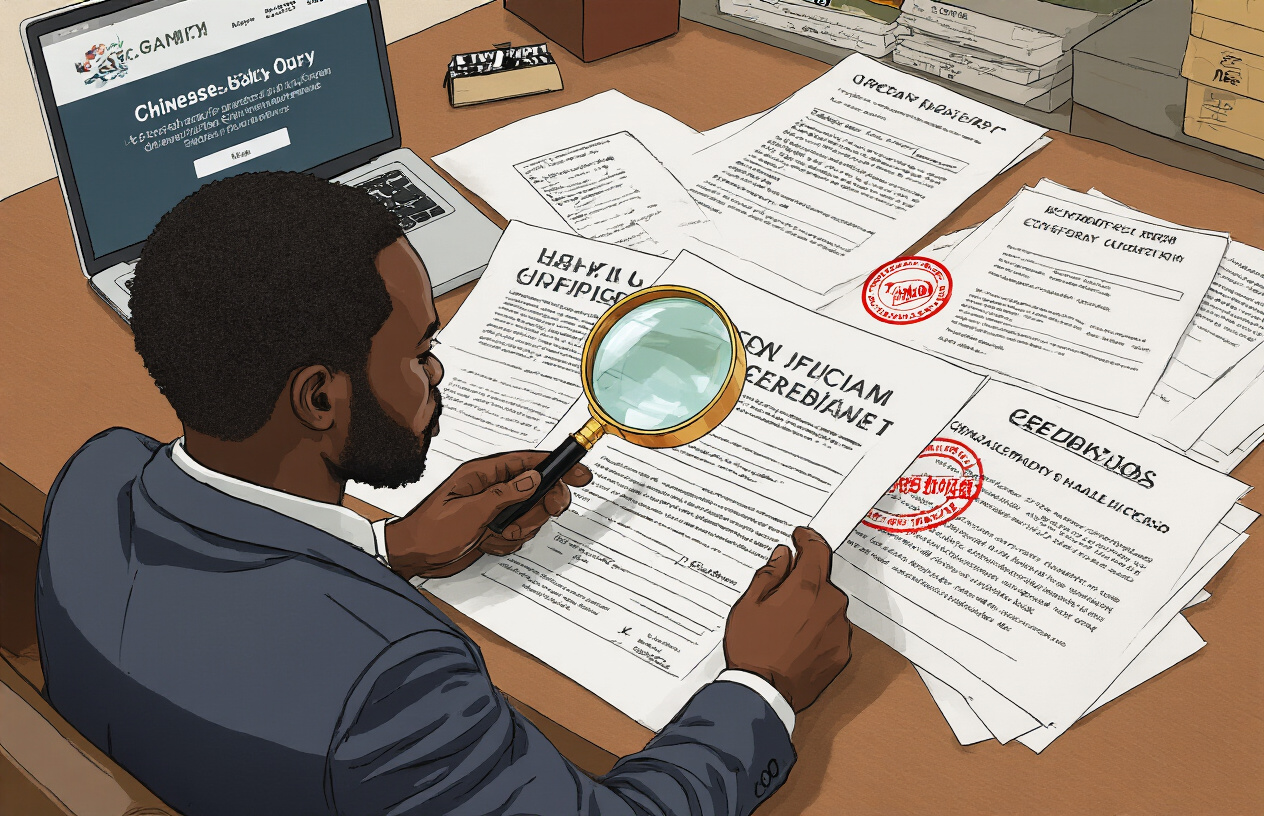
A. Essential company documentation to request
Don’t get caught in a bad supplier situation. Always request these documents before signing any deals:
- Business License: Confirms they’re legally registered in China
- Tax Registration Certificate: Shows they’re paying taxes (aka not a fly-by-night operation)
- Export License: Proves they can legally ship products internationally
- Product Certifications: Think ISO, CE, FDA depending on your products
- Bank Account Information: Must match the company name exactly
These papers tell you who you’re really dealing with. A legit supplier will hand these over without making excuses. If they start dodging or saying “we’ll send it later,” that’s your first warning sign.
B. Background checks and due diligence procedures
Trust is expensive in this business. Here’s how to verify before you wire any money:
-
Cross-reference everything. Company name, address, and registration numbers should match across all documents.
-
Check their digital footprint. How long has their website existed? Are they on multiple platforms with consistent information?
-
Call their references. Ask for client contacts and actually call them. Not just the ones they offer—request specific ones from their client list.
-
Third-party verification services. Services like Global Sources or Alibaba’s verification program can confirm basic details.
-
Credit reports. Companies like Sinosure offer credit reports on Chinese businesses.
The goal isn’t just to find problems but to build a complete picture of who you’re working with.
C. Importance of factory visits and inspections
Nothing beats seeing operations with your own eyes.
When you visit a factory, you’re looking for things documents can’t show you:
- Are workers skilled and properly equipped?
- Is the facility clean and organized?
- Do they have proper quality control stations?
- Can they show you their production capacity in real-time?
- Are there other brands’ products being manufactured (good sign)?
Can’t travel to China? Hire a third-party inspection service like SGS or Bureau Veritas. They’ll be your eyes and ears on the ground.
Pro tip: Schedule visits without much notice. The real factory conditions show up when they’re not preparing for weeks.
D. Red flags that signal unreliable suppliers
Watch out for these warning signs that scream “walk away”:
-
Too-good-to-be-true pricing: If it’s drastically below market rates, they’re cutting corners somewhere.
-
Communication issues: Delayed responses or constantly changing contact persons.
-
Reluctance to provide samples: Real manufacturers want to show off their quality.
-
Vague answers about production capacity: They should know their numbers cold.
-
Unwillingness to modify contracts: Legitimate suppliers understand negotiation.
-
Requesting unusual payment methods: Western Union or personal accounts instead of company accounts? Run.
-
No quality control processes: Ask how they handle defects—blank stares are bad news.
-
Inconsistent sample quality: If samples vary wildly, imagine what bulk orders will look like.
The best Ghanaian importers I know have walked away from dozens of suppliers before finding their trusted partners. Patience pays off.
Negotiating Favorable Terms
Understanding pricing structures and MOQ requirements
The whole game changes when you understand what you’re actually paying for in China.
Most suppliers operate on tiered pricing – buy more, pay less per unit. But here’s what they don’t tell you upfront: MOQs (Minimum Order Quantities) are often negotiable, especially for Ghanaian importers just starting out.
When a factory quotes “5,000 units minimum,” they really mean “we prefer 5,000 units, but we might accept 3,000 if you’re serious.” Test this by countering with a smaller order at a slightly higher unit price. You’d be surprised how flexible suppliers become when they see long-term potential.
Watch out for hidden costs too. The quoted price rarely includes packaging, samples, or shipping to port. Ask specifically: “Does this price include export packaging?” and “What additional fees should I expect?”
Payment methods that protect Ghanaian importers
The days of sending full payment upfront are long gone. Smart Ghanaian importers use staged payments to reduce risk.
A typical structure that works well:
- 30% deposit to begin production
- 40% when production is complete (verified with photos/videos)
- 30% before shipping or after inspection
Letters of Credit offer the best protection but come with complexity and bank fees. T/T (wire transfer) is more common, but always insist on a detailed contract before sending any money.
Escrow services like Alibaba Trade Assurance are game-changers for new importers. They hold your payment until you confirm receipt of satisfactory goods.
Crafting contracts that safeguard your interests
A proper contract isn’t just nice to have – it’s your lifeline when things go sideways.
Your contract should spell out:
- Exact product specifications with photos
- Quality standards (preferably international ones like ISO)
- Inspection procedures and rejection criteria
- Penalties for delays or quality issues
- Warranty terms and dispute resolution process
The magic phrase to include: “This agreement shall be governed by the laws of [neutral country].” This prevents being forced to pursue legal action in China.
Don’t just accept the supplier’s template. Have your own contract drafted that protects Ghanaian import regulations and standards.
Strategies for building long-term supplier relationships
The biggest mistake Ghanaian importers make? Treating suppliers like one-time vendors instead of business partners.
Build trust gradually:
- Start with smaller orders, increase volume over time
- Pay on schedule (Chinese suppliers remember reliable payers)
- Visit your suppliers in person when possible
- Send holiday greetings during Chinese New Year
- Communicate regularly, not just when ordering
Chinese business culture values relationships (guanxi) above all else. Once you’re in the inner circle, you’ll get priority during busy seasons, heads-up about price changes, and sometimes even lower MOQs.
The suppliers who go the extra mile for you during challenges are worth their weight in gold. Nurture those relationships like your business depends on it – because it does.
Quality Control and Product Compliance

A. Implementing effective sampling procedures
Getting samples right is crucial when importing from China to Ghana. Don’t just ask for one sample and call it a day. Smart importers request multiple samples from different production runs to spot inconsistencies.
Here’s a sampling approach that works:
- Initial sample: Get this before placing any order
- Pre-production sample: Approve this before mass production starts
- During-production samples: Random picks from the actual production line
- Final random samples: Check these before shipment
The magic happens when you pull random samples. Tell your supplier you want to inspect units from different batches, not just the perfect ones they’ve set aside for you.
B. Third-party inspection services for Ghanaian importers
Relying solely on supplier promises? That’s a rookie move.
Third-party inspection services are your eyes on the ground in China. Companies like SGS, Bureau Veritas, and Intertek have offices in both China and Ghana, making them perfect partners.
These inspections typically cost $300-500 per day, but compare that to receiving a container of unusable products in Tema port. Suddenly seems cheap, right?
Most inspection companies offer:
- Pre-shipment inspections
- During production checks
- Factory audits
- Loading supervision
C. Testing for Ghana Standards Authority compliance
The Ghana Standards Authority (GSA) doesn’t mess around when it comes to imports. Products failing to meet standards get rejected at the port or even destroyed.
Certain products require GSA certification before they even leave China:
- Electronics and electrical equipment
- Construction materials
- Food products
- Cosmetics
- Children’s toys
Smart move: Submit your product specifications to GSA before production begins. This gives you clear compliance guidelines to share with your Chinese supplier.
Many Ghanaian importers have learned the hard way that passing Chinese standards doesn’t guarantee GSA approval. The requirements are different, and you need to know both.
D. Managing product defects and supplier disputes
When things go sideways with your Chinese supplier (and at some point, they will), having documentation saves you.
Your dispute management toolkit should include:
- Detailed quality control reports with photos
- Written communication history
- Signed contracts with defect thresholds clearly stated
- Payment terms that protect you
I’ve seen countless Ghanaian importers lose money because they paid 100% upfront. Instead, structure payments like this:
- 30% deposit
- 40% when production is complete and inspected
- 30% after receiving goods in acceptable condition
When disputes arise, approach them strategically. Chinese suppliers value relationships and reputation. Often, proposing a partial refund or discount on future orders works better than demanding full compensation.
E. Certification requirements for specific product categories
Different products, different certification headaches. Here’s what you need for key import categories:
Electronics:
- GSA certification
- Energy Commission approval
- Electromagnetic compatibility testing
Food Products:
- Food and Drugs Authority (FDA) registration
- Certificate of Analysis
- Shelf-life documentation
- Halal certification (where applicable)
Textiles:
- Fabric composition certificates
- Colorfast testing reports
- GSA quality marking
Pharmaceuticals:
- Ghana FDA registration
- Good Manufacturing Practice certification
- Batch testing documentation
Don’t wait until your products arrive in Ghana to discover certification requirements. The process can take weeks or months, and you’ll be paying storage fees at the port while you scramble for paperwork.
Smart importers work backward – identify all certification requirements first, then ensure their Chinese suppliers can meet these standards before production begins.
Logistics and Shipping Considerations
Comparing shipping methods from China to Ghana
Shipping from China to Ghana isn’t a one-size-fits-all situation. Your choice impacts everything from your timeline to your wallet.
| Method | Transit Time | Cost | Best For |
|---|---|---|---|
| Sea Freight | 35-45 days | $1,200-2,500/container | Bulk orders, heavy items |
| Air Freight | 5-7 days | $4-8/kg | Urgent orders, high-value goods |
| Express Courier | 3-5 days | $10-15/kg | Samples, small packages |
| Rail-Sea Combined | 40-50 days | 15-20% cheaper than sea | Budget-conscious importers |
Most Ghanaian importers go with sea freight through Tema or Takoradi ports when they’re not in a rush. But if those designer clothes need to hit your store before the trend dies, air freight’s your friend.
Customs clearance procedures at Ghanaian ports
Customs clearance in Ghana can be smooth or a total headache depending on your prep work.
First, you’ll need to register with the Ghana Revenue Authority and get your TIN number. Then comes the Ghana Customs Management System (GCMS) where your shipment gets classified.
The process typically goes:
- Submit import declaration through GCMS
- Pay duties and taxes (average 20% of CIF value)
- Physical inspection (random or targeted)
- Release order issued
Pro tip: Hiring a customs broker who knows the Tema port inside out can save you days of delays and potential storage fees.
Documentation requirements for smooth importation
Want your goods to sail through customs? Your paperwork game needs to be strong.
Essential documents include:
- Commercial Invoice
- Bill of Lading/Airway Bill
- Packing List
- Certificate of Origin
- ECOWAS Trade Liberalization Scheme Certificate (when applicable)
- Product-specific certificates (health, phytosanitary, conformity)
- Import Declaration Form
- Final Classification and Valuation Report
- Tax Clearance Certificate
Missing even one of these can mean your shipment sits at the port collecting dust (and fees).
Calculating total landed costs accurately
Many Ghanaian importers get shocked by unexpected costs that turn profitable deals into money losers.
Your landed cost calculation should include:
- Product cost
- Shipping fees
- Insurance (typically 1-2% of product value)
- Import duties (5-35% depending on category)
- VAT (12.5%)
- NHIL (2.5%)
- ECOWAS levy (0.5%)
- GCNet charge (0.4%)
- Inspection fees
- Port handling charges
- Transport to your warehouse
- Bank fees and currency conversion costs
Create a comprehensive spreadsheet with these categories before placing orders. Add a 5-10% buffer for unexpected costs, because trust me, they always pop up.
Remember, the cheapest supplier quote often doesn’t translate to the lowest landed cost once everything’s factored in.
Navigating China’s vast manufacturing landscape can be challenging for Ghanaian importers, but with the right approach, you can build profitable and lasting supplier relationships. By understanding the Chinese market dynamics, thoroughly researching potential partners, and implementing rigorous verification processes, you’ll significantly reduce risks associated with international sourcing.
Remember that successful importing from China requires ongoing attention to quality control, clear communication, and logistical planning. Take time to develop your supplier relationships gradually, visit facilities when possible, and always verify product compliance with Ghanaian regulations. With patience and diligence, you can establish a reliable supply chain that supports your business growth and meets your customers’ expectations.