

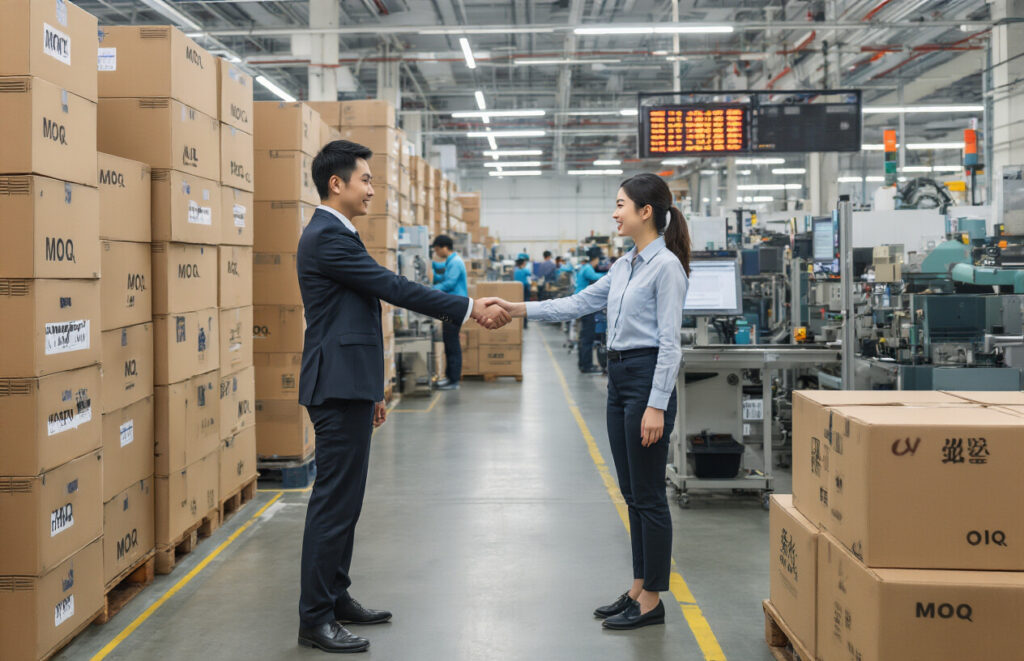
Understanding Minimum Order Quantities When Dealing with China
Navigating minimum order quantities (MOQs) is essential for businesses sourcing products from China. Whether you’re a small startup or an established retailer, understanding how MOQs work can make or break your sourcing strategy.
This guide explains everything importers need to know about MOQ requirements when working with Chinese suppliers, including practical negotiation strategies that actually work.
What is Minimum Order Quantity and Why Chinese Suppliers Set Them
Chinese manufacturers typically set MOQs due to their razor-thin profit margins (often just 2-3%). These requirements help suppliers:
- Cover production setup costs
- Achieve economies of scale
- Meet their own suppliers’ material MOQs
- Maintain profitability on each order
Unlike many Western manufacturers, Chinese suppliers rarely keep finished export-ready products in stock, making MOQs necessary for most custom orders.
Navigating Different Types of MOQ Requirements
MOQs are more complex than they initially appear. They can include:
- Per order MOQs (500-1000 pieces minimum)
- Per product MOQs
- Per material MOQs
- Per color MOQs (often lower for standard colors)
- Per size MOQs
Understanding this structure is crucial for effective negotiation and product planning. For example, a clothing manufacturer might require 1000 pieces per order but only 250 pieces per standard color, allowing you to create multiple product variations within a single order.
Ready to learn practical strategies for reducing MOQs and making your sourcing more flexible? Let’s explore how to negotiate effectively with Chinese suppliers and plan your product range to work within MOQ constraints.
What is Minimum Order Quantity (MOQ) and Why it Matters
What is Minimum Order Quantity (MOQ) and Why it Matters
Definition and explanation of MOQ
Minimum Order Quantity (MOQ) refers to the smallest quantity of a product or service that a supplier or manufacturer requires you to purchase in a single order. It’s also sometimes known as “The Minimum Purchase Quantity.” When you’re sourcing products from China, understanding this concept is crucial as it will significantly impact your purchasing decisions and inventory management.
MOQs aren’t arbitrary numbers set to make your life difficult. They exist because they allow manufacturers to optimize their production processes. When you order in larger quantities, manufacturers can reduce their production costs per unit, maintain profitability, and operate their facilities efficiently.
How MOQ impacts supply chain management
MOQs directly affect how you manage your supply chain. When dealing with Chinese suppliers, you’ll need to align your inventory planning with their minimum requirements. This means you must carefully forecast your demand to ensure you’re not ordering excessive stock that might sit in your warehouse.
Your cash flow is another important consideration. Higher MOQs require more upfront capital investment, which can strain your financial resources. You’ll need to balance meeting these requirements with maintaining healthy working capital for other business operations.
Importance of meeting MOQ requirements for business relationships
Meeting MOQ requirements is vital for establishing stable and reliable relationships with your Chinese suppliers. When you consistently meet or exceed their minimum orders, you demonstrate that you’re a serious buyer worthy of their attention and best service.
By honoring MOQs, you can access more competitive pricing since suppliers are more willing to offer discounts to customers who make their production runs worthwhile. Additionally, maintaining consistent order volumes helps ensure a steady supply of products to meet your customers’ demands.
With this understanding of MOQs, you’ll be better positioned to navigate the complexities of sourcing from Chinese manufacturers and build profitable, sustainable supplier relationships.
Common MOQ Requirements Across Different Industries
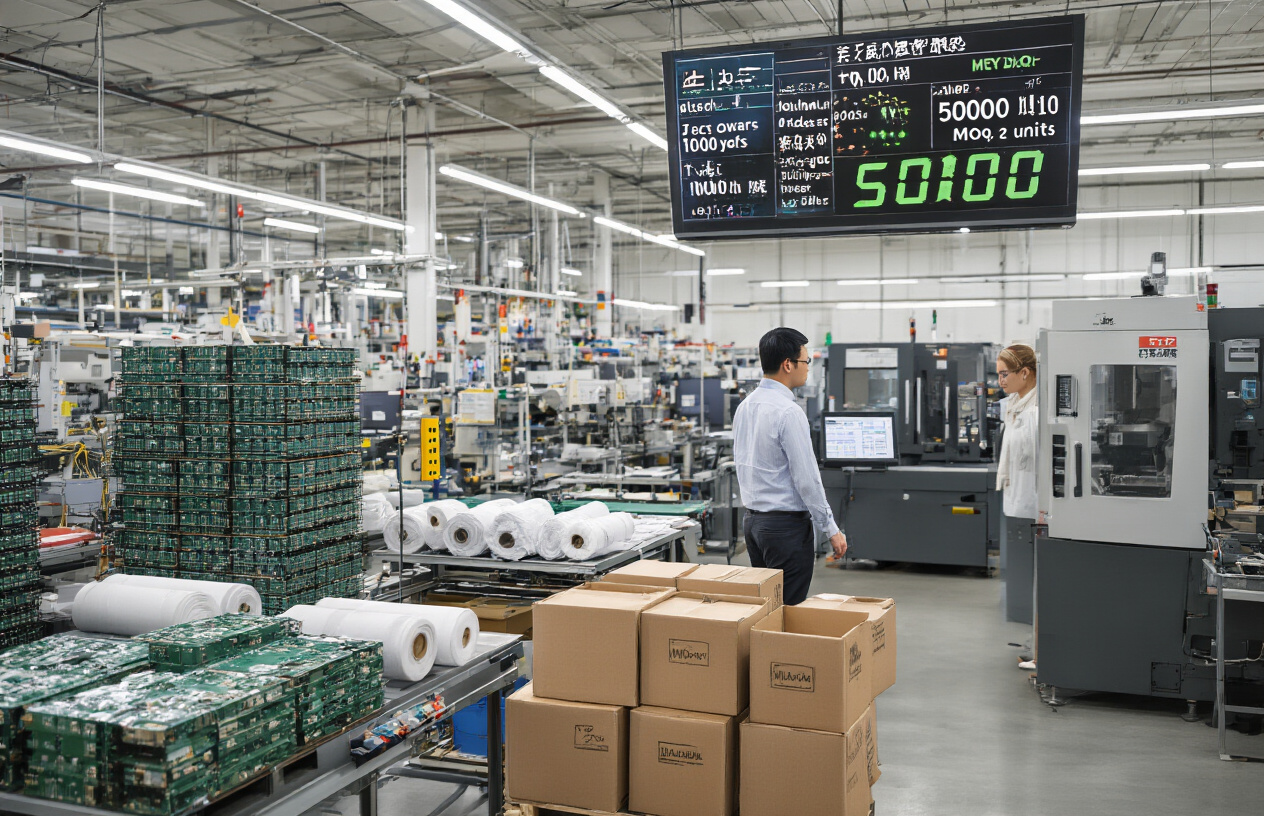
Common MOQ Requirements Across Different Industries
When sourcing products from China, you’ll encounter varying minimum order quantity requirements depending on the industry. Understanding these typical MOQs helps you plan your inventory and budget more effectively.
A. Clothing and textiles
When dealing with Chinese clothing manufacturers, you’ll typically face MOQs of 750-1000 pieces per order. If you’re looking to create custom colors for your clothing line, be prepared for requirements of 750-1000 pieces. Standard colors have lower thresholds of 150-300 pieces. For size variations, expect MOQs of 150-250 pieces per size. Additionally, fabric MOQs typically hover around 300 meters per shirt color, which is important to consider when planning your production runs.
B. Electronics and tech products
For electronics sourcing, Chinese manufacturers generally set MOQs at 750-1000 pieces per order. You’ll need to commit to approximately 750 pieces per product type, and the same quantity applies per color variation. These higher requirements reflect the complexity of electronics manufacturing and the setup costs involved.
C. Kitchen and household items
When sourcing kitchen products from China, you’ll encounter MOQs similar to electronics – typically 750-1000 pieces per order. Manufacturers usually require 750 pieces per product or material type, and another 750 pieces per color variation. These requirements help manufacturers maintain efficient production cycles while ensuring cost-effectiveness.
D. Watches and accessories
If you’re entering the watch market, you’ll face MOQs of around 750 pieces per order. Chinese manufacturers typically require 750 pieces per model, including different case sizes. For color variations (affecting both dial and case), the requirements are somewhat lower at 150-200 pieces per color, giving you more flexibility to test different aesthetic options.
E. Toys and children’s products
When sourcing toys and children’s products, you’ll need to commit to 750-1000 pieces per order. Manufacturers typically require 750 pieces per product or material type, and another 750 pieces per color. These requirements ensure production efficiency while maintaining safety standards essential for children’s products.
Why Chinese Manufacturers Set MOQ Requirements
Why Chinese Manufacturers Set MOQ Requirements
A. Low profit margins necessitate larger volumes
When you’re sourcing products from China, you’ll quickly discover that manufacturers operate on extremely slim profit margins—often as low as 2-4%. This economic reality forces them to seek larger production volumes to reach profitability. By requiring higher minimum orders, you’re helping them achieve their break-even point while they reduce per-unit costs through economies of scale. Your larger order allows them to spread fixed costs across more units, making the entire production run viable for their business model.
B. MOQs set by material subcontractors
You should understand that your Chinese manufacturer often doesn’t control all aspects of production. Many rely heavily on subcontractors for materials and components. When you place an order, your manufacturer must meet their own suppliers’ minimum requirements. These upstream MOQs directly impact what the factory can offer you. For example, if a fabric supplier requires a 1,000-meter minimum, your manufacturer can’t produce just 50 units of your product without having excess materials. Your MOQ is essentially a reflection of their supply chain constraints.
C. Limited inventory of ready-made products
You might wonder why you can’t simply purchase existing inventory. The reality is that Chinese factories rarely maintain “export-ready” products in stock. While some off-the-shelf products exist, these are typically designed for the domestic Chinese market and don’t comply with international labeling or safety standards that you need. This means your products must be “made-to-order” to meet your country’s specific requirements, triggering those MOQ requirements that wouldn’t apply for domestic sales.
D. Multiple MOQ requirements per product
When negotiating with suppliers, you’ll discover that MOQs aren’t as simple as a single number. You’re actually dealing with multiple MOQ requirements that vary based on several factors. For standard materials, you might face lower minimums, but request custom materials and you’ll see those requirements increase. Similarly, standard colors typically have lower MOQs than custom colors. Product size variations can also trigger different minimum requirements. As you add more customization to your order, you’ll generally encounter higher MOQs across these various dimensions.
Understanding Different Types of MOQ

Understanding Different Types of MOQ
Complex MOQ for highly customized products
When you’re ordering highly customized products from Chinese manufacturers, you’ll encounter complex MOQ structures. These apply particularly to items requiring specific dimensions, shapes, or designs – such as custom apparel. The complexity arises because numerous variables affect production.
For example, if you’re ordering custom t-shirts with specific designs, manufacturers might require 300 pieces per distinct color/size combination. Similarly, when ordering custom fabric, you might face an MOQ of 300 meters. These requirements exist because setting up production lines for highly customized items involves significant setup costs that only become economical at certain volumes.
Low MOQ for simpler customizations
If your customization needs are simpler, you’ll find more flexibility with lower MOQs. Products requiring minimal personalization, such as adding your company logo to standard t-shirts for office uniforms, typically have MOQs of fewer than 500 units. This makes it more accessible for smaller businesses or organizations like schools that need branded merchandise but can’t commit to large volumes.
No MOQ options for standard products
You’ll be pleased to know that for completely standard products, some Chinese suppliers offer no MOQ options at all. These orders are typically fulfilled from a manufacturer’s existing inventory of unbranded products. This allows you to purchase even single units if needed. An additional benefit is that these orders often qualify for express delivery within China, getting your products to you faster.
Minimum Order Value (MOV) vs. Minimum Order Quantity
When negotiating with Chinese suppliers, you need to understand the difference between MOV and MOQ. Minimum Order Value (MOV) refers to the lowest monetary amount a supplier will accept per order – for instance, $25,000. This approach focuses on the total transaction value rather than unit count.
In contrast, Chinese manufacturers almost exclusively work with Minimum Order Quantity (MOQ), which specifies the minimum number of units you must purchase. This distinction is important when planning your sourcing strategy, as it affects how you structure your orders and which suppliers you can work with based on your budget and quantity needs.
Strategies to Negotiate and Reduce MOQ Requirements
Strategies to Negotiate and Reduce MOQ Requirements
A. Present your order volume and MOQ bid to suppliers
When approaching Chinese manufacturers, instead of simply asking about their MOQ requirements, try presenting your complete order volume as an “MOQ bid.” By showing suppliers your full order list, they can review your entire business potential and often become more flexible. This approach frequently prompts them to offer reduced MOQs per individual SKU or color variation.
B. Simplify components and materials across products
You can significantly reduce MOQ requirements by reusing the same materials and components across multiple products. This strategy helps your supplier meet their subcontractors’ MOQs more efficiently. By planning your product line with material commonality in mind, you can expand your product assortment while facing lower individual MOQs for each item.
C. Limit product customization to reduce requirements
The more customized your product, the higher the MOQ typically becomes. To keep MOQs manageable, maintain minimal product customization by opting for standard factory components and designs. For example, consider adding custom logos to existing products rather than creating entirely new designs. Highly customized components almost always lead to significantly higher MOQs.
D. Offer higher prices for lower quantities
You can incentivize suppliers to accept smaller order volumes by offering to pay a higher unit price. Consider proposing a 10-20% price increase in exchange for a lower MOQ. Many Chinese manufacturers operate on thin profit margins, making small orders unprofitable at standard prices. Your willingness to pay more per unit can make your smaller order more attractive.
E. Source from smaller or more flexible manufacturers
Smaller manufacturers in China tend to be more flexible with MOQ requirements and are often eager for business compared to larger factories. These suppliers may accept lower order values to build relationships with new clients. However, ensure that these smaller manufacturers still meet your country’s quality and compliance standards before proceeding.
F. Order test batches as standard practice
Many suppliers are willing to accept a lower MOQ for an initial test production run. Propose starting with a smaller test batch to verify quality and build trust. Be aware that while this strategy works well for initial orders, suppliers will likely expect you to meet their standard MOQ for all subsequent orders. This approach allows you to start small while planning for larger volumes in the future.
Navigating MOQ Challenges for Small Businesses
Navigating MOQ Challenges for Small Businesses
How to satisfy supplier MOQ requirements
As a small business owner, you’ll often face minimum order quantity challenges when sourcing from China. To meet these requirements, you should prepare to operate with lower initial profits. This strategy allows you to satisfy supplier demands while establishing your business relationship. You can also plan comprehensive marketing campaigns specifically designed to move inventory quickly once it arrives.
Marketing strategies to sell required inventory
When you’ve committed to a large order to meet MOQ requirements, you need effective strategies to sell that inventory. Consider offering attractive deals to your customers such as “Buy one, get one half off” or “Buy two, get one free” promotions. These incentives can significantly increase your sales volume. Flash sales are another powerful tool you can implement to create urgency and move large quantities of inventory in a short timeframe.
Balancing customization with MOQ limitations
You can navigate MOQ challenges by understanding your supplier’s MOQ structure in detail. Pay attention to how they structure requirements per material, color, and size. This knowledge allows you to order a wider range of SKUs within a single order. For example, you might order the same product in multiple colors or shapes rather than focusing solely on highly customized elements. Remember that highly customized products typically lead to higher MOQs, so balancing your desire for uniqueness with practical MOQ limitations is essential.
When to walk away from deals with inflexible MOQs
If you’ve found a reputable supplier who refuses to reduce their MOQ and meeting their requirements would put your business in a difficult financial position, it may be time to find a new source. While negotiating, you should avoid using rude tactics, as Chinese vendors can potentially blacklist buyers they find difficult to work with. Knowing when to conclude negotiations gracefully is crucial for maintaining your reputation in the Chinese manufacturing market. Sometimes walking away is the best business decision you can make when MOQs are truly inflexible.
Potential Issues When Buying Below MOQ
Potential Issues When Buying Below MOQ
A. Quality inconsistencies with materials
When you purchase below a manufacturer’s MOQ, you’re likely to encounter quality inconsistencies with your products. This happens because suppliers themselves face MOQ requirements from their material providers. Unable to meet these requirements for a small order, they’ll often resort to using whatever materials they have in stock. These “in-stock” fabrics or materials can vary significantly from batch to batch, potentially affecting critical aspects of your product such as fitting, washing behavior, and overall durability.
B. Risk of working with less reliable suppliers
You should be cautious of suppliers willing to accept extremely low MOQs (like 10-20 pieces). These are typically not actual manufacturers but trading companies or distributors. The products they offer are usually off-the-shelf items intended for the domestic Chinese market. This presents significant risks as these products may not comply with international product safety standards or labeling laws applicable in your target market. By working with these suppliers, you’re essentially increasing your exposure to reliability issues and potential regulatory problems.
C. Higher per-unit costs affecting profitability
When you seek out suppliers willing to work below standard MOQs, you’ll almost inevitably face higher per-unit costs. Manufacturers need to compensate for the smaller overall profit by increasing the price per item. This price increase helps them offset their fixed production expenses that would normally be distributed across a larger order. These elevated costs can significantly impact your profit margins and may make your business model unsustainable in the long run.
D. Limited customization options
Products purchased below MOQ typically come with severe limitations on customization. Since these items are often pulled from existing domestic market stock, you’ll have little to no ability to modify them according to your brand specifications. This means you may be unable to add your logo, change colors, adjust packaging, or make other modifications that differentiate your product in the marketplace. Additionally, these stock items may not meet international branding requirements or safety standards that apply in your target market, further limiting their viability for your business.
MOQ in China Compared to Other Manufacturing Countries
MOQ in China Compared to Other Manufacturing Countries
China’s flexibility versus Vietnam and India
When sourcing products internationally, you’ll find that China offers significantly more flexibility with MOQs compared to other manufacturing hubs in Asia. Chinese suppliers are generally more willing to accommodate smaller orders, often accepting MOQs in the hundreds of units. This is in stark contrast to manufacturers in Vietnam and India, where you’ll typically encounter much higher minimum requirements—often in the thousands of units.
This flexibility gives you a distinct advantage when working with Chinese manufacturers, especially if you’re running a small business or testing new products. You’ll have more room to negotiate and can often secure reasonable MOQs that match your budget and inventory needs.
Seasonal and economic factors affecting MOQ requirements
You should be aware that MOQ requirements aren’t fixed and can fluctuate based on several external factors. When a Chinese factory has a full production schedule, you’ll find them less willing to accept smaller orders. Conversely, if you approach suppliers during their slower periods, you’ll likely encounter more flexibility on minimum quantities as they’re eager to keep production lines running.
Economic shifts also play a significant role in MOQ flexibility. Following the COVID-19 pandemic, many Chinese manufacturers have become more accommodating with their minimum requirements as they adapt to changing market conditions. You’ll benefit from this increased flexibility in most industries, though it’s worth noting that certain sectors experienced the opposite effect. For example, if you’re sourcing medical supplies, you might have faced higher MOQs during peak demand periods of the pandemic.
Industry-specific differences across manufacturing regions
When comparing manufacturing regions for your specific industry, you’ll need to conduct targeted research as industry-specific MOQ differences vary significantly across manufacturing countries. While general trends show China offering more flexibility, your particular product category may have unique considerations that affect minimum order requirements.
Conclusion
Navigating Minimum Order Quantity requirements is a critical aspect of successfully sourcing products from China. Throughout this guide, we’ve explored how MOQs serve essential purposes for manufacturers while presenting challenges for importers, especially smaller businesses. Understanding that MOQs exist due to low profit margins, material sourcing constraints, and production efficiency helps buyers approach negotiations with realistic expectations.
The most effective approach to managing MOQs isn’t simply trying to negotiate them away, but implementing strategic solutions like simplifying materials, limiting customization, or considering higher unit prices for lower quantities. Whether you’re comparing China’s relatively flexible MOQ requirements to those in Vietnam or India, or exploring ways to work with different types of MOQ constraints, remember that finding the right supplier relationship is ultimately more important than securing the absolute lowest MOQ. By applying the strategies outlined in this guide, you can effectively balance your inventory needs with supplier requirements while maintaining product quality and building sustainable business relationships.